
Before Marc Maron played the abrasive, chain-smoking B-movie director Sam Sylvia in Netflix’s GLOW, a real Hollywood filmmaker was barking orders at neon-clad wrestlers inside a Las Vegas television production. His name was Matt Cimber.
Long before entering the wrestling ring, Cimber—born Thomas Vitale Ottaviano—built one of the most eccentric résumés in American entertainment. His path spanned Off-Broadway theater direction, cult blaxploitation films, controversial psychological horror, historical projects, and a headline-grabbing marriage to Hollywood star Jayne Mansfield.
When he joined forces with wrestling promoter David McLane and businessman Meshulam Riklis in 1986, Cimber brought his B-movie sensibilities to an experimental all-women wrestling project. By infusing the ring action with Mad magazine satire, vaudeville-style sketches, musical routines, and character-driven comedy, he helped transform GLOW: Gorgeous Ladies of Wrestling into a syndicated pop-culture phenomenon.
Quick Facts
| Field | Details |
|---|---|
| Full birth name | Thomas Vitale Ottaviano |
| Professional name | Matt Cimber |
| Date of birth | January 12, 1936 |
| Age | 90 as of 2026 |
| Birthplace | The Bronx, New York City, United States |
| Nationality | American |
| Professions | Director, producer, writer, and occasional actor |
| Early profession | Theater and Off-Broadway director |
| Notable stage work | Burning Bright and Bus Stop |
| Feature directorial debut | Single Room Furnished |
| Major television project | GLOW: Gorgeous Ladies of Wrestling |
| Former spouse | Jayne Mansfield |
| Son | Antonio “Tony” Cimber |
From Off-Broadway Theater to Hollywood
Cimber began his professional career in New York theater during the early 1960s. His stage work involved material associated with Jean Cocteau, Tennessee Williams, F. Scott Fitzgerald, John Steinbeck, and William Inge. Among his notable productions were Steinbeck’s Burning Bright and a revival of Inge’s Bus Stop.
Theater gave Cimber practical experience in blocking movement, controlling pacing, developing exaggerated personalities, and directing actors toward a live audience. Those skills later became valuable in GLOW, where inexperienced performers had to communicate instantly through entrances, gestures, expressions, costumes, and carefully positioned action for television cameras.
His Marriage to Jayne Mansfield
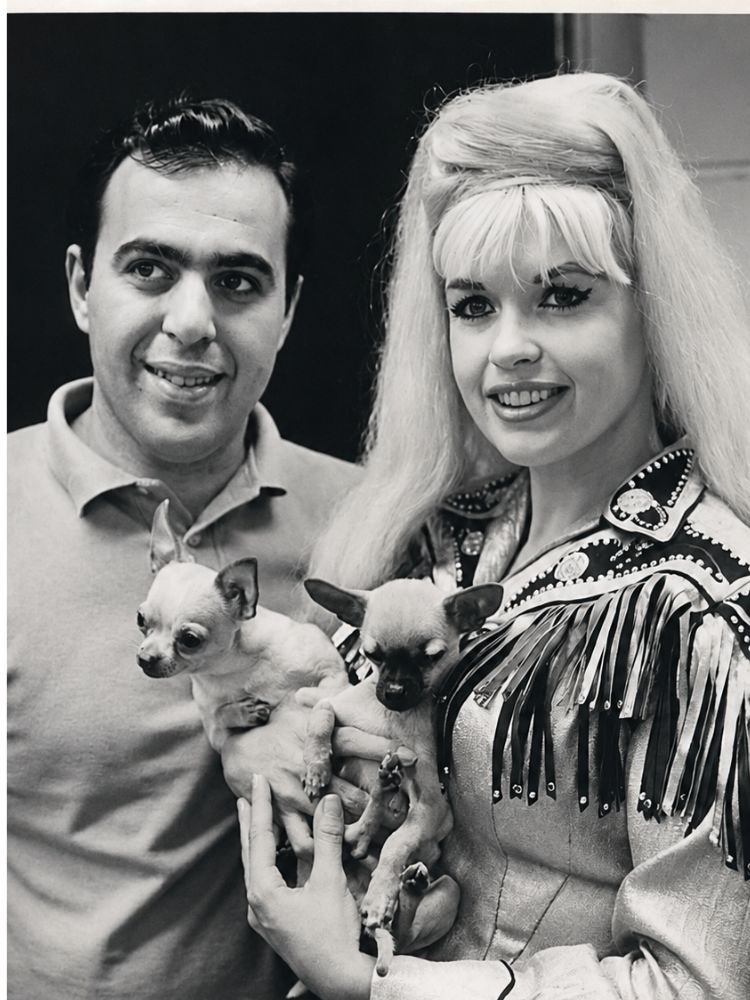
Cimber met Jayne Mansfield while directing her in Bus Stop. Their professional relationship became personal, and they married in 1964. Their son, Antonio “Tony” Cimber, was born in October 1965. The couple separated the following year, and divorce proceedings were underway before Mansfield’s death in June 1967.
Their creative collaboration produced Single Room Furnished, Cimber’s first feature as a director. Mansfield played several women in connected dramatic stories, allowing her to move beyond the glamorous bombshell image that had defined much of her public career. The film became her final completed starring feature to receive a theatrical release.
A Cult-Film Career Outside the Mainstream
After Single Room Furnished, Cimber built a career in independent cinema rather than following a traditional studio route. His films moved through crime, blaxploitation, action, psychological horror, melodrama, and fantasy. Major titles included The Black Six, Lady Cocoa, The Candy Tangerine Man, The Witch Who Came from the Sea, Butterfly, A Time to Die, and Hundra.
His projects were often marketed as exploitation pictures, but several have since attracted deeper critical attention. Cimber showed an interest in damaged outsiders, divided identities, social hypocrisy, and characters living beyond respectable society. Even his most sensational films often contained more psychological or political complexity than their advertising suggested.
Why The Candy Tangerine Man Became a Cult Favorite
Released in 1975, The Candy Tangerine Man follows a successful Sunset Strip pimp who leads a second life as a suburban husband and father. The contrast between those identities gives the film a strange mixture of street crime, domestic drama, dark humor, and social observation.
Cimber later identified it as one of his most personal projects. The film developed a cult following because it captured parts of Los Angeles rarely presented in polished studio productions. Its energetic location work, unconventional characters, and refusal to offer simple moral judgments helped it outlast many similar low-budget releases.
The Witch Who Came from the Sea and the Video Nasty Era
The Witch Who Came from the Sea starred Millie Perkins as a troubled woman whose fantasies, memories, and violent impulses gradually blur together. Although promoted as lurid horror, the film is now frequently discussed as a disturbing exploration of childhood trauma, psychological fragmentation, and repressed abuse.
The film also became associated with Britain’s notorious “video nasty” controversy during the 1980s. Its provocative title, advertising, and violent content placed it within a censorship panic that affected dozens of horror and exploitation releases. Later reassessment focused more closely on its performances, visual style, and treatment of trauma.
Ennio Morricone’s Connection to Cimber’s Films
Cimber’s independent productions attracted contributions from distinguished international artists. Most notably, legendary Italian composer Ennio Morricone provided music connected with Butterfly, A Time to Die, and the sword-and-sorcery adventure Hundra.
Morricone’s sweeping and atmospheric compositions gave the films a scale that contrasted with their modest commercial positioning. His work was especially effective in Hundra, where the music supported landscapes, battles, and the emotional development of a female warrior navigating a hostile world.
The Pia Zadora and Meshulam Riklis Connection
One of the most important links between Cimber’s film career and GLOW began with Butterfly, his adaptation of the James M. Cain novel. The film starred Pia Zadora and was financed through business interests associated with her husband, Meshulam Riklis.
Cimber and Riklis had already established a professional relationship through the production of Butterfly. When the unconventional women’s wrestling project required financial support and an experienced director, that previous collaboration helped place Cimber at the center of the new television production.
Who Created the Original GLOW?
David McLane developed the original concept for an all-women wrestling television promotion. He believed female performers could carry a complete program rather than appearing as a novelty attraction within a male-dominated wrestling show.
Cimber brought a different set of instincts. McLane favored a stronger emphasis on wrestling, while Cimber pushed for comedy, musical numbers, and variety-show entertainment. Their creative disagreement became increasingly important as the series developed, and McLane left after the second season before later becoming involved with POWW: Powerful Women of Wrestling.
How Cimber Reinvented Wrestling for Television
Cimber did not want GLOW to resemble an ordinary regional wrestling broadcast. He drew inspiration from Mad magazine, Laugh-In, Hee Haw, vaudeville, comic books, and low-budget genre films, surrounding the matches with songs, political jokes, comedy sketches, interviews, and continuing character stories.
This approach created a self-contained television universe. Ninotchka delivered exaggerated Soviet speeches, Mt. Fiji combined physical dominance with warmth, villains issued theatrical threats, and the full cast performed the memorable opening GLOW rap. Cimber later estimated that the series produced around 1,750 comedy sketches during its original run.
Auditions and the Search for the GLOW Cast
Many of the women who auditioned were actresses, dancers, models, athletes, or stunt performers rather than professional wrestlers. Some arrived expecting a standard acting opportunity and discovered that the job required them to perform physically demanding routines inside a wrestling ring.
The casting process focused on personality as much as athletic experience. Producers needed women who could become memorable television characters, deliver comedy, handle interviews, and learn basic wrestling quickly. Distinctive voices, body types, backgrounds, and performance styles became part of the show’s appeal.
Wrestling Training at the Riviera
The selected cast members entered an intensive training period before filming. Veteran wrestler Mando Guerrero taught them how to fall, grapple, move safely, cooperate with opponents, and perform for cameras. For beginners, even basic wrestling movements required repetition, timing, strength, and trust.
Training days could stretch for many hours, and television tapings sometimes required performers to complete several matches in a single day. The glamorous image of Las Vegas hid a demanding routine of rehearsals, costume preparation, comedy scenes, interviews, and repeated physical impact.
High Heels, Hard Falls, and Cimber’s Directing Style
Cimber ran the production through strict rehearsals, curfews, character rules, and intense criticism. Women playing heroes and villains were sometimes discouraged from socializing, reinforcing the fictional rivalries while also extending management control beyond the television set.
Several former performers later described his language as humiliating. Patrisha King, who played Jailbait, remembered one especially cutting comment about her appearance:
“Your ass looks like a bunch of mashed potatoes.”
Cimber defended his severity by emphasizing the genuine physical risks of professional wrestling. Most of the cast members were beginners, and a badly executed throw, body slam, or fall could cause a serious injury. From his perspective, absolute preparation was essential when performers were learning dangerous movements under tight production deadlines.
That concern did not erase the emotional impact of his behavior. Cast members recalled screaming, insults, restrictions, and a stressful atmosphere controlled largely by male producers. Any balanced account of Cimber must recognize both his creative contribution and the damaging experiences described by women who worked under him.
The Women Who Became GLOW’s Real Stars
Cimber and the production team shaped the initial characters, but the performers gave those identities personality and staying power. Emily Dole’s Mt. Fiji, Deanna Booher’s Matilda the Hun, Jeanne Basone’s Hollywood, and Lisa Moretti’s Tina Ferrari became memorable through humor, physical commitment, confidence, and steadily improving ring ability.
Mt. Fiji became the beloved powerhouse of the original cast, while Matilda the Hun embraced an outrageous villain persona. Lisa Moretti later reinvented herself as Ivory, won the WWE Women’s Championship three times, and entered the WWE Hall of Fame in 2018.
Empowerment, Exploitation, and Offensive Stereotypes
GLOW placed women at the center of an action-based television series during a period when female wrestlers were usually treated as secondary attractions. The performers became heroes, villains, comedians, athletes, and television personalities whose stories did not depend on male wrestlers.
At the same time, the series relied on exaggerated racial, national, political, and social stereotypes. Cold War villains, patriotic characters, voodoo-inspired personas, housewives, farmers, cheerleaders, and other caricatures reflected the broad and often insensitive style of 1980s syndicated comedy.
The show could therefore feel empowering and exploitative at the same time. It gave women visibility, physical authority, and creative opportunities while presenting them through sexualized costumes, offensive gimmicks, and production decisions made primarily by men. Many performers nevertheless remembered the experience with pride and affection, even while speaking honestly about injuries, low pay, pressure, and difficult working conditions.
GLOW’s Place in the 1980s Wrestling Boom
The original series aired from 1986 to 1990, during the same period that Hulk Hogan and the World Wrestling Federation were turning professional wrestling into mainstream family entertainment. GLOW entered that expanding market without attempting to imitate men’s wrestling directly.
Its identity depended on female characters, broad comedy, colorful costumes, and a sense that almost anything could happen. The in-ring performances were less polished than those of established wrestling organizations, but the personalities and continuing feuds encouraged audiences to return.
GLOW proved that an all-women promotion could attract a national syndicated audience without relying on male wrestlers as its main attraction. That achievement helped create cultural space for later women-centered promotions and for female wrestlers to be treated as headline performers.
The show’s long-term importance lies in its visibility as much as its technical quality. It placed women in a complete wrestling universe with their own heroes, villains, stories, humor, and fan culture at a time when few television producers believed such a format could work.
Is Sam Sylvia Based on Matt Cimber?
Netflix’s Sam Sylvia, played by Marc Maron, is not a direct biographical portrait of Cimber. The character is a fictional composite whose relationships, addictions, personal history, and emotional conflicts were created for the streaming series.
The resemblance is still easy to recognize. Both men are independent filmmakers with B-movie backgrounds who enter women’s wrestling with little respect for the industry, then discover creative possibilities within its theatrical characters and exaggerated storytelling.
| Comparison | Matt Cimber | Sam Sylvia |
|---|---|---|
| Identity | Real filmmaker and producer | Fictional television character |
| Background | Theater and independent genre cinema | Low-budget exploitation films |
| GLOW role | Director, producer, and creative architect | Director of the fictional promotion |
| Creative approach | Comedy, music, satire, and wrestling | Character drama, comedy, and wrestling |
| Public image | Remembered as inventive and controlling | Written as cynical, volatile, and insecure |
| Historical accuracy | Part of the original GLOW production | Loosely inspired composite |
Maron has acknowledged Cimber as one of the real figures who informed his understanding of Sam. The character is therefore best viewed as a fictional echo of the director rather than a recreation of his life.
Netflix used the similarity to explore a broader idea: a struggling filmmaker unexpectedly finding artistic purpose in an entertainment form he initially considers beneath him. That journey reflects part of Cimber’s real transition from cult cinema into syndicated wrestling television.
Tony Cimber and the Mariska Hargitay Connection

Cimber’s son Antonio “Tony” Cimber is one of Jayne Mansfield’s five children, making him the maternal half-brother of actress Mariska Hargitay, known for Law & Order: Special Victims Unit. This connection links Cimber’s legacy to one of television’s most recognizable stars.
The relationship gained attention when Marc Maron discussed Sam Sylvia’s inspiration with Hargitay, who had not realized her half-brother’s father influenced the fictional GLOW director. This unexpected link highlighted how closely real and fictional worlds intersect.
Tony also became involved in entertainment and women’s wrestling projects, adding another layer to the story. Altogether, this connection remains one of the most surprising aspects of Cimber’s biography, tying him to both GLOW and modern television culture.
Cimber’s Later Films and Documentary Work
After the original GLOW period, Cimber increasingly worked on historical and documentary projects, expanding his interests into institutional history, public figures, international affairs, and cultural subjects. He later returned to feature filmmaking with Miriam (2006), a World War II story about survival through identity.
Cimber’s earlier films gained new audiences through restorations, streaming releases, and critical reassessment. The Witch Who Came from the Sea received particular attention as a psychologically complex film whose original marketing had hidden much of its ambition.
The Netflix series and documentaries about GLOW introduced Cimber to a new generation of viewers. This renewed interest sparked discussions about his creativity, abrasive leadership, and unusual place in entertainment history.
Interesting Facts About Matt Cimber
- Matt Cimber was born Thomas Vitale Ottaviano and used different professional names during his career.
- His theater background included productions connected with Jean Cocteau, John Steinbeck, and William Inge.
- He directed films scored by celebrated composer Ennio Morricone.
- Cimber estimated that GLOW produced around 1,750 comedy sketches during its original run.
- His career crossed theater, blaxploitation, horror, fantasy, wrestling television, and historical documentaries.
FAQs
Did Matt Cimber create the original GLOW?
David McLane developed the original concept, while Cimber shaped it into a comedy-driven wrestling and television variety show.
Is Sam Sylvia based on Matt Cimber?
Sam Sylvia is a fictional composite, but Cimber’s B-movie career and role in the original GLOW clearly influenced the character.
Why was Matt Cimber chosen to direct GLOW?
His previous work with Pia Zadora and Meshulam Riklis created the professional connection that brought him into the production.
Was Matt Cimber married to Jayne Mansfield?
Yes. Matt Cimber married Jayne Mansfield in 1964, and they had one son, Antonio “Tony” Cimber, before separating.
Which Matt Cimber films are best known today?
His best-known films include The Candy Tangerine Man, The Witch Who Came from the Sea, Butterfly, Hundra, and Miriam.
Conclusion
Matt Cimber’s place in television history cannot be reduced to a single label. He was not a conventional wrestling promoter, yet he understood how wrestling could become a theatrical spectacle built on characters, comedy, and visual flair.
David McLane created the original concept, Meshulam Riklis provided financial backing, and Cimber shaped the unique style that defined GLOW. The performers then brought these ideas to life with energy, humor, and athleticism.
Cimber’s strict methods drew criticism, and the show reflected both opportunity and the exploitation, stereotypes, and male control of its time. Still, GLOW’s lasting legacy belongs equally to the women who made it memorable through their performances.
Discover more Hollywood directors and entertainment icons at Divide Magazine